Autorius: Vygintas (Page 1 of 7)

Lithuania in Europe’s Economic Race: How a Small Baltic Nation Is Sprinting Past Its Rivals

Economics & Science · Research Digest

Economic Research

A new mathematical model reveals why Lithuania may top Central and Eastern Europe in GDP per capita by 2030 — and what a flock of starlings has to do with it.

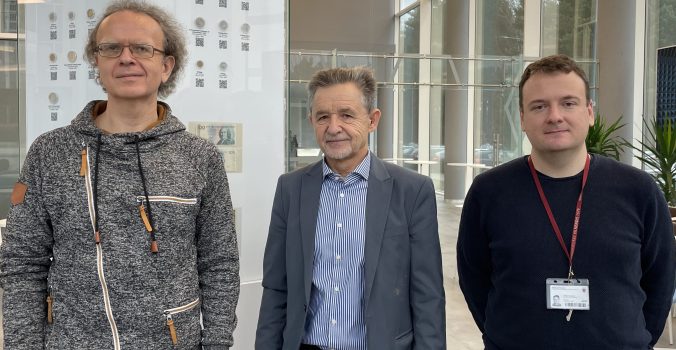
In late March 2026, a new seminar series opened at the Institute of Lithuanian Scientific Society — named after the economist Jonas Pranas Aleksa. The inaugural talk was delivered by Prof. Vygintas Gontis, and its subject was deceptively modest: how Lithuania managed to become one of the fastest-growing economies in Central and Eastern Europe. The answer, it turns out, involves birds.

The research behind the lecture, published in two recent papers on arXiv, proposes a fresh lens for understanding how economies grow. Forget the usual policy prescriptions and microeconomic tinkering. What if the most important dynamics of economic development happen at the macro level — visible only when you step back far enough to see the whole flock?

The Murmuration of Markets

Have you ever watched a murmuration of starlings — that fluid, shape-shifting cloud of thousands of birds moving as one? No single bird is in charge. No one issues commands. Each bird simply watches its neighbours and adjusts. The result is breathtaking collective intelligence.

„Countries don’t need to invent the smartphone from scratch. They just need to watch someone else profit from it.”

Prof. Gontis and his collaborators argue that technology adoption among nations works the same way. They call it the herd model. When a wealthier country adopts a technology and visibly prospers, neighbouring countries notice — and imitate. Two forces drive this imitation:

Force 1 — Personal incentive

„This new technology lets me earn more.” Pure rational calculation.

Force 2 — Social pressure

„Everyone else is adopting it. If I don’t, I’ll fall behind.” The herd instinct.

Together, these two forces create a powerful engine of catch-up growth — especially for countries that are far behind the technological frontier. The further behind you are, the faster you can theoretically catch up, because the gap between your current state and what’s possible is enormous.


The Mathematics of Catching Up

To turn this intuition into something testable, the researchers built a mathematical model. It is elegant in its simplicity: each country begins at some level of technological development, the most advanced countries set a moving frontier, and lagging nations close the gap over time — but not at the same rate.

As a country nears the frontier, the pace of catch-up slows. This makes intuitive sense: there are fewer obvious imitation opportunities left, and the remaining innovations are genuinely hard to copy. The model produces a characteristic S-shaped curve of productivity growth.

The researchers tested this model against decades of real data from Central and Eastern European countries, comparing them against benchmarks like Germany and the United States. The fit was striking. Countries genuinely do follow the predicted trajectory — accelerating when far behind, slowing as they approach the leaders.


The Secret Variable: Debt

But not all countries catch up at the same speed. Some sprint. Others jog. A few stumble. What explains the difference?

The researchers found a surprisingly powerful predictor: private sector debt. Specifically, the level of household and corporate borrowing from banks.

Key Finding In one of their papers, the authors demonstrate that the single greatest influence on a Central or Eastern European country’s catch-up speed is the trajectory of its private debt. Countries that built up excessive credit before the 2008 financial crisis are still paying the price — literally — in slower productivity growth.

Countries that over-borrowed before 2008 spent the following decade deleveraging — paying down debt rather than investing in new technologies. This depressed their catch-up speed precisely when they should have been accelerating.

Lithuania’s story is the inverse. It entered the 2008 crisis with relatively modest private debt levels. The crisis was painful — Lithuania suffered one of the sharpest GDP contractions in the EU — but the country emerged leaner, with its balance sheets clean and its capacity to invest intact. The low-debt position, the model suggests, is the structural reason Lithuania has since been able to grow so fast.

#1 Projected CEE ranking by GDP per capita in 2030
1995 Start year for the CEE economic dataset used in the model
2050 Forecast horizon in the longer-term model projections

Contrasts: Romania Rockets, Slovenia Stalls

The elegance of the model lies in what it reveals about individual countries’ trajectories. Two contrasting cases stand out.

Romania started from a very low productivity base — which actually works in its favour. With such a large gap to close, even modest technology adoption generates dramatic percentage gains. The model projects rapid growth continuing well into the 2030s.

Slovenia, meanwhile, presents a cautionary tale. It began from a higher base than most CEE countries — closer to the Western European frontier — but its private debt dynamics have weighed on its catch-up speed. The model predicts slower convergence, confirming what the data has shown for the past decade.

Lithuania’s low pre-crisis debt isn’t just historical trivia. The model treats it as the decisive structural advantage that explains the country’s exceptional economic sprint.

A Different Way of Seeing Economics

Perhaps the most intellectually interesting aspect of this research is its methodological stance. The authors explicitly reject the conventional microeconomic approach of building up from individual agents, firms, and market interactions.

Instead, they adopt the perspective of an outside observer watching the whole system. Like a biologist studying a murmuration rather than tracking individual birds, they look for macro-level patterns — the collective dynamics that emerge from millions of individual decisions but cannot be reduced to any of them.

This approach, borrowed partly from statistical physics, allows them to sidestep the „noise” of micro-level fluctuations and identify the underlying signal: the smooth, predictable curve of technological catch-up. The model is explicitly approximate. It doesn’t account for political upheaval, institutional quality, or individual crises. But its authors argue that this simplicity is a virtue — it reveals the structural forces that operate beneath the policy noise.

IMF & Model Consensus Forecast — 2030

Lithuania overtakes all Central & Eastern European peers in GDP per capita

Driven by the lowest pre-crisis private debt accumulation in the CEE region


Why This Matters Beyond Lithuania

The implications reach well beyond one small Baltic nation. If the herd model is correct, then economic policy advice that ignores private debt dynamics and focuses only on innovation, education, or institutional reform may be missing the central variable.

It also offers a more optimistic reading of development economics. Growth, in this view, is not primarily about rare genius or fortunate geography. It is a social process — systematic, learnable, and to a significant degree predictable. Countries that watch, imitate, and invest wisely will catch up. The mathematics says so.

For Lithuania, the message is one of hard-won vindication. The brutal austerity of 2009–2010, widely criticised at the time, left the country with clean books precisely when it needed them most. The sprint that followed wasn’t luck. It was structure.

The Bottom Line

Economic growth isn’t only about inventing new things. It’s about the social process of watching, learning, and adopting what works — fast enough to matter. Lithuania’s advantage isn’t genius or luck. It’s a balance sheet kept clean when others borrowed recklessly. The mathematics of catch-up says the sprint isn’t over yet.

The Project of a Common European Economic Area

Christmas is an appropriate time to share good news. In collaboration with ChatGPT, we have produced comparative maps of the European economy for 1995 and 2024, based on IMF World Economic Outlook (WEO) data. The good news is that the European map in 2024 is incomparably more even and balanced than in 1995. This clearly demonstrates the real benefits of European economic integration and substantially weakens recurring claims about Europe’s alleged economic stagnation.

Skaitykite toliau

Is the United States’ Productivity Advantage Merely a Result of the Chosen Measurement Methodology?

Global economic media frequently report that U.S. productivity has been growing much faster than in Europe and other developed Western economies for many years. As an example, consider the recent publication in the Financial Times (FT) [1]. This is not journalistic exaggeration—such conclusions follow directly from the still widely used methodology of calculating real GDP and productivity, and from international comparisons based on that methodology.

Skaitykite toliau

Can Lithuania’s Economy Catch Up and Overtake Western Countries?

Can Lithuania catch up with and even overtake Western Europe? This question is provocative—but not without foundation. A recent study (Gontis et al., 2025, arXiv:2510.04211) showed that Lithuania’s economic progress stands out among the countries of Central and Eastern Europe (CEE). Yet can this growth pace enable it to reach the level of Malta and other Western economies? Using the same data and methodology, we compared the development of Malta and Spain to identify which factors determine successful convergence.

Skaitykite toliau

The Main Reason for Lithuania’s Economic Success – Low Private Debt.

Together with Assoc. Prof. Lesya Kolinets, lecturer in international macroeconomics at VILNIUS TECH and professor at Ternopil National Economic University, and I prepared a scientific manuscript (Gontis et al., 2025, arXiv:2510.04211) on the economic development of Central and Eastern European (CEE) countries from 1995 to 2024.
The results of this study may be of interest to a broad audience seeking to gain a deeper understanding of the reasons behind
Lithuania’s economic success since regaining independence. Using relatively simple econometric tools, we identify the key macroeconomic and financial components of CEE economic growth, among which low private debt accumulation emerges as a particularly significant factor.

Skaitykite toliau

Lithuania’s Economic Growth — Exceptional in Central and Eastern Europe

Comparing the economic development of countries is not as straightforward as it may seem to many. The most commonly used indicator—Gross Domestic Product (GDP) per capita or per employee—can vary significantly depending on the currency used and how inflation in goods, services, and money is accounted for. What complicates comparison most is that exchange rates between currencies do not reflect differences in purchasing power across the countries being compared.


To address this issue, the Purchasing Power Parity (PPP) method has been developed, which introduces a real exchange rate that accounts for price level differences between countries. As a result, economic statistics experts around the world generally agree that international comparisons of economic development must be based on the PPP method.

However, we must acknowledge that in the public domain—including even in widely recognized sources of economic information—other comparison methods are often used. Most commonly, we see countries compared by real GDP, adjusted to constant prices and expressed in a common currency. It should come as no surprise that such comparisons often yield very different results than those based on PPP.

In this brief overview of economic development in Central and Eastern Europe (CEE), we rely on data from the International Monetary Fund (IMF) World Economic Outlook (WEO) database, using the PPP method. The selected period spans 1995 to 2030, for which this data is available. Understandably, figures from 2025 to 2030 are projections, but they are based on the best available macroeconomic models and the observed development of each country up to 2024.

Below, an interactive country comparison chart presents both the absolute values of GDP per capita in international US dollars (click „Scores”) and the ranking of each country relative to others (click „Rank”).

Both visualizations are highly valuable.

  • The “Scores” view gives a compelling sense of how successfully CEE countries have integrated into the Western economic space: GDP growth reaches up to tenfold.
  • There is no doubt that the new EU member states are rapidly converging with the old ones, confirming the economic success and benefits of the EU project for CEE countries.

Country-by-country comparison becomes even more dynamic when shown by ranking in the “Rank” view. In this visualization, Lithuania advances from the second-lowest position in 1995 to a projected leadership role by 2030. Had we included Southern European countries such as Italy, Spain, Portugal, and Greece, it would become clear that Lithuania is expected to lead even among them.

Although Lithuania still faces many unresolved social challenges, it can rely on a strong economic foundation as it seeks the best available ways to overcome them.

Appeal for Support to Commemorate the Battle of Vorskla at the Poltava Museum

The Institute of Lithuanian Scientific Society, in cooperation with Ukrainian scholars working in Lithuania, seeks to commemorate the Battle of Vorskla, which took place on August 12, 1399. This sociocultural project is especially relevant today, reminding us of the historical roots of cooperation between the Lithuanian and Ukrainian nations. Although the Christian alliance, composed of Lithuanian, German, Polish, Ruthenian, and Moldavian forces under the leadership of Grand Duke Vytautas, suffered a painful defeat, this battle should not only be remembered but also reconsidered in the broader context of civilizational development.
Grand Duke Vytautas commemorated the Battle of Vorskla by founding a church in Kaunas.

VytautoDidziojoBaznycia
Grand Duke Vytautas church in Kaunas.

We organized several informational events to raise awareness of the Poltava City Council’s decision to commemorate the Battle of Vorskla at the site of the Poltava Battle Museum in Ukraine. You are welcome to explore them:

  1. Project presentation event — Youtube recording
  2. Public lecture by Professor Valdas Rakutis: “The Battle of Vorskla (1399) and Kaunas” (January 12, 2025) — Youtube recording
    Historical sources confirm that, despite having a military-technological advantage, the Christian coalition could not overcome the Golden Horde’s forces, which outnumbered them threefold. The battle claimed many lives. Historical memory and respect for those who perished are of immeasurable value to the identity and future perspective of the nations of this region.

The Battle of Vorskla took place on the frontier of the Grand Duchy of Lithuania, in what is now Ukrainian territory, near the Vorskla River. It was a dramatic clash between Christian and Tatar nomadic civilizations, manifested in military conflict. The exact location of the battle remains unknown, as no remains or burial sites of soldiers have been discovered. Historians must rely on the chronicle of Swedish historian Gustaf Adlerfelt, who recorded that the 1709 Battle of Poltava occurred on the same field as Vytautas the Great’s Battle of Vorskla.

625 years later, the Poltava City Council, following an initiative by Dr. Ganna Nevoit and supported by the local community, resolved to commemorate the Battle of Vorskla. The council approved both the monument’s design and its location within the protected grounds of the Poltava Battle Museum, which is believed to be the site of the battlefield. The museum administration agreed to take over the completed monument into its care and maintenance.

Remembering lost battles and those who died is just as critical as celebrating victories. Regardless of the outcome, battles give us insight into the political and military history of their time. From the perspective of historical memory, they allow us to discover and highlight the continuity of values and ideas. We now have an excellent opportunity to honor the historical cooperation between the Lithuanian and Ukrainian nations, which will undoubtedly remain significant for their future destinies.
Therefore, we invite everyone who can contribute to the necessary funding for the monument’s installation. The Institute of Scientific Society (short Lithuanian MSI) takes responsibility for collecting donations in Lithuania. It will cooperate with the Ukrainian Scholars Section of the Lithuanian Scientific Society and Dr. Ganna Nevoit to implement the project and formally hand over the monument to the Poltava Battle Museum.

You can donate with a single click of the “Donate” button at the beginning of this appeal.
Please note that you can allocate a portion of the donation as a tip to the WhyDonate platform developers during payment. If you wish your donation goes to the Vorskla project, set the “Tips” slider to 0%.

On behalf of the MSI and Ukrainian scholars working in Lithuania, we also address companies and entrepreneurs regarding opportunities to collaborate in commemorating the Battle of Vorskla at the Poltava Battle Museum. This may also become the beginning of broader cooperation with Ukrainian researchers, both in Lithuania and beyond.
We are always ready to meet and discuss collaboration opportunities.
If you are interested in supporting this project, please contact MSI Director Prof. Dr. Habil. Vygintas Gontis at vygintas@gontis.eu or tel. +370 698 12384,
or Poltava Council Member Dr. Ganna Nevoit at anevoiyt@gmail.com to receive more details directly from the project’s initiators.

Kreipimasis dėl paramos įamžinti Vorsklos mūšį

Mokslininkų sąjungos institutas, bendradarbiaudamas su Lietuvoje dirbančiais Ukrainos mokslininkais, siekia įamžinti atminimą apie Vorsklos mūšį, vykusį 1399 metais rugpjūčio 12 d. Šis socialinis kultūrinis projektas tapo ypatingai aktualus šiandien, kai ieškome istorinių lietuvių ir ukrainiečių tautų bendradarbiavimo šaknų.

Nors tą mūšį jungtinės krikščioniškai civilizacijai atstovaujančios Vytauto didžiojo vadovaujamos lietuvių, vokiečių, lenkų, rusėnų, moldavų pajėgos skaudžiai pralaimėjo, jo ne tik negalime užmiršti, bet privalome naujai permąstyti bendrame civilizacijų istorinės raidos kontekste. Istoriniai šaltiniai patvirtina, kad tuo metu turėtas karinis technologinis pranašumas prieš Aukso ordos tris kartus kiekybiškai didesnes pajėgas nebuvo pakankamas, o mūšis nusinešė labai daug gyvybių. Istorinė atmintis ir pagarba žuvusiems turi neįkainuojamą vertę ir tolimesnei šio regiono tautų savimonei bei tolimesnės raidos perspektyvai.

         Mūšis vyko Lietuvos didžiosios kunigaikštytės pakraštyje, dabartinės Ukrainos teritorijoje, šalia Vorsklos upės ir savo esme yra vienas ryškiausių istorinių krikščioniškosios ir totorių klajoklių kultūrų susidūrimų, pasireiškusių kariniu konfliktu. Klausimas dėl tikslios mūšio vietos nėra išspręstas, nes taip ir nepavyksta rasti karių palaikų ar kitų laidojimo ženklų. Tenka remtis švedų istoriko Karolio XII metraštininko Gustafo Adlerfeldo įrašais apie tai, kad Poltavos 1709 m. mūšis vyko tame pačiame lauke, kaip ir Vytauto Didžiojo Vorsklos mūšis.

         Praėjus 625 metams, Poltavos miesto taryba, daktarės Ganna Nevoit iniciatyva ir miesto bendruomenei palaikant, priėmė sprendimą įamžinti Vorsklos mūšio atminimą. Taryba taip pat patvirtino paminklo projektą ir jo įrengimo vietą Poltavos mūšio lauko teritorijoje, kur ir, manoma, vyko Vorsklos mūšis. Projekto vizualizaciją pridedame. Kadangi numatyta vieta yra saugomoje Poltavos mūšio teritorijoje, prižiūrimoje Poltavos mūšio muziejaus, yra gautas muziejaus sutikimas perimti pastatytą paminklą į savo balansą, saugoti jį bei prižiūrėti.

Atmintis apie pralaimėtus mūšius ir juose žuvusius yra nemažiau svarbi nei skambios pergalės. Nepriklausomai nuo rezultato, mūšiai leidžia pažvelgti į to laikmečio politinę, karybos istoriją, o istorinės atminties požiūriu matyti ir atrasti idėjų tęstinumą. Turime puikią galimybę įamžinti lietuvių ir ukrainiečių tautų bendradarbiavimo istoriją, kuri neišvengiamai ir toliau bus svarbi tolimesniam šių tautų likimui. Todėl prašome visus galinčius prisidėti prie reikalingų lėšų paminklo įrengimui surinkimo. Viešoji įstaiga „Mokslininkų sąjungos institutas“ (MSI) imasi atsakomybės lėšas rinkti Lietuvoje ir bendradarbiaus su Lietuvos mokslininkų sąjungos ukrainiečių mokslininkų skyriumi bei daktare Ganna Nevoit šį paminklą įrengiant numatytoje vietoje ir perduodant jį Poltavos mūšio muziejui.

Dėl savo ketinimų prisidėti prie šio projekto įgyvendinimo prašome kreiptis į MSI direktorių Dr.(Habil) Vygintą Gontį vygintas@gontis.eu, tel. +370 698 12384, arba Dr. Ganna Nevoit, anevoiyt@gmail.com, jei norėtumėt gauti daugiau informacijos apie projektą iš pirmų lūpų.

Short research review: Applications of statistical physics investigating financial and other social systems.

Vygintas Gontis, Aleksejus Kononovičius, Julius Ruseckas

Teorines fizikos ir astronomijos institutas, Vilniaus universitetas, Sauletekio al. 3, 10257 Vilnius, vygintas@gontis.eu

Physics research complements traditional approaches, such as mathematical (stochastic) finance and econometrics in quantitative economics and finance [1, 2]. In the early years of this millennium, we embarked on an interdisciplinary research endeavor in Lithuania, applying concepts from statistical physics to understand complex financial and social systems. Here, we provide a short review of investigations in Lithuania, spanning from 2008 to 2022, undertaken by our research group.

The term „Econophysics” was coined by Professor H. E. Stanley over three decades ago, merging the disciplines of Economics and Physics. While the precise definition of „Econophysics” remains subject to ongoing debate, numerous reputable research groups and scientific journals worldwide are actively contributing to its development.

Our journey into Econophysics prompts the intriguing question of how theories primarily designed to explain the physical world in terms of particles can be applied to unravel the complexities of human social and economic behavior. Physics, as a natural science, is renowned for its precision and predictive power, grounded in the utilization of a limited set of universal properties of matter, sufficient to elucidate a multitude of physical phenomena. In stark contrast, the social sciences lack equivalent precise universal properties for individuals. Human beings, unlike fundamental particles, differ significantly from one another in numerous aspects. Despite this fundamental distinction between physical and social systems, the analogy between statistical laws in physics and social sciences continues to drive the application of statistical physics to investigate the properties of financial and other social systems.

Skaitykite toliau

Statistines fizikos metodų taikymai finansinėse ir kitose socialinėse sistemose

Vygintas Gontis, Aleksejus Kononovicius, Julius Ruseckas

Teorines fizikos ir astronomijos institutas, Vilniaus universitetas, Sauletekio al. 3, 10257 Vilnius, vygintas@gontis.eu

Fizikos tyrimo metodų taikymas papildo tradicinius finansinių, ekonominių ir kitų socialinių sistemų tyrimo būdus: ekonomiką, finansų matematiką ir ekonometriją [1, 2]. Jau pačioje šio amžiaus pradžioje mūsų grupės nariai ėmėsi Lietuvoje naujos tarpdisciplininės tyrimų krypties, pradėdami taikyti statistinės fizikos metodus ir aiškindamiesi sudėtingų finansinių bei kitų socialinių sistemų veikimą. Šiuos inovatyvius mūsų grupės moksliniius tyrimus apžvelgiame laikotarpiu nuo 2008 iki 2022 metų.

Terminas „Ekonofizika”, jungiantis ekonomikos ir fizikos disciplinas, pradėtas naudoti daugiau nei prieš 30 metų profesoriaus H. E. Stanley iniciatyva. Nors tikslesnio ir išsamesnio šio termino apibrėžimo vis dar ieškoma, daug pripažintų tyrimo grupių ir mokslo žurnalų visame pasaulyje prisideda prie sparčios tarpdisciplininės mokslo srities plėtros. Polymerų studijų centras Bostono universitete, kuriam vadovauja prof. H. E. Stanley, yra tapęs viso pasaulio Ekonofizikos specialistų traukos centru. Verta pastebėti, kad V. Gontis 10 mėnesių 2014-2015 metais stažavosi šiame centre taip pat.

Skaitykite toliau
« Older posts