

Christmas is an appropriate time to share good news. In collaboration with ChatGPT, we have produced comparative maps of the European economy for 1995 and 2024, based on IMF World Economic Outlook (WEO) data. The good news is that the European map in 2024 is incomparably more even and balanced than in 1995. This clearly demonstrates the real benefits of European economic integration and substantially weakens recurring claims about Europe’s alleged economic stagnation.
The data provide compelling evidence that economic growth is not merely the outcome of domestic policies in individual countries. On the contrary, the expansion of international economic linkages and cooperation plays a far more significant role in driving growth. From this perspective, growth theorists face a serious challenge: to develop international macroeconomic models capable of explaining the true roots of economic convergence.
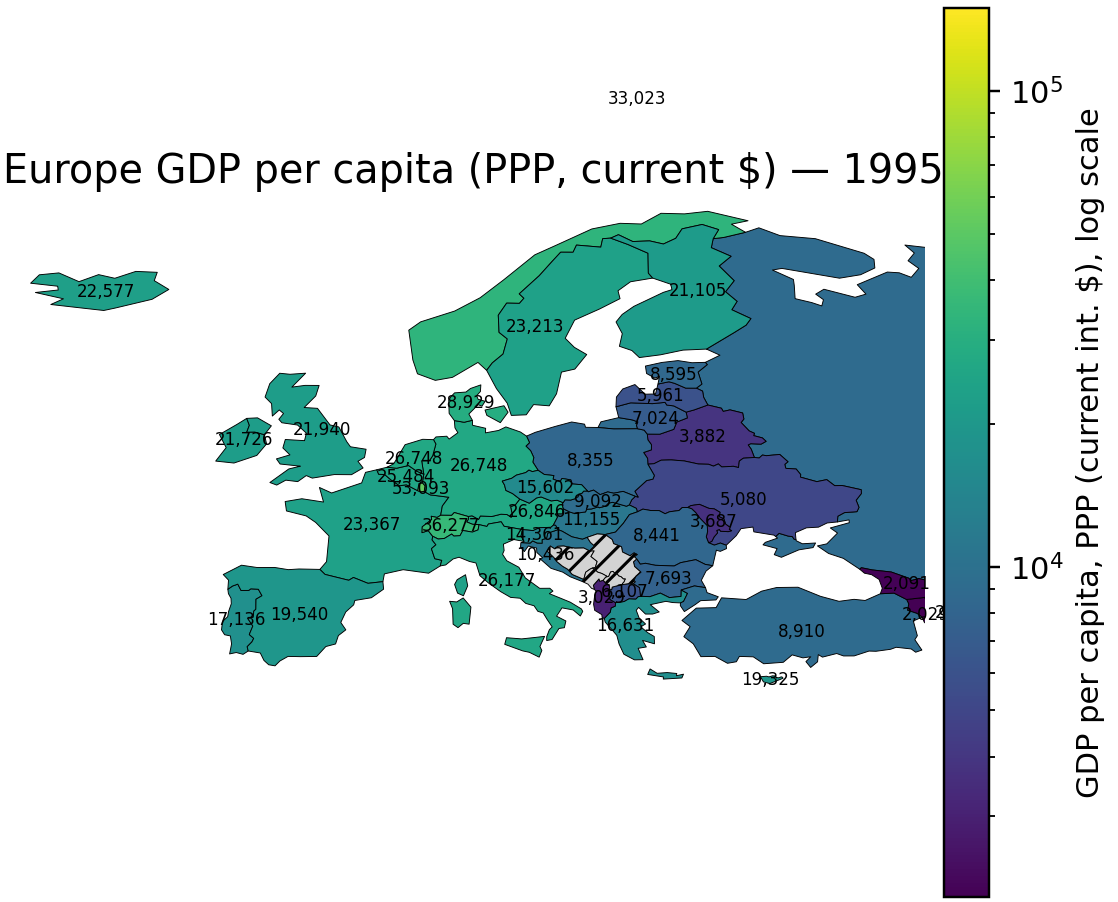
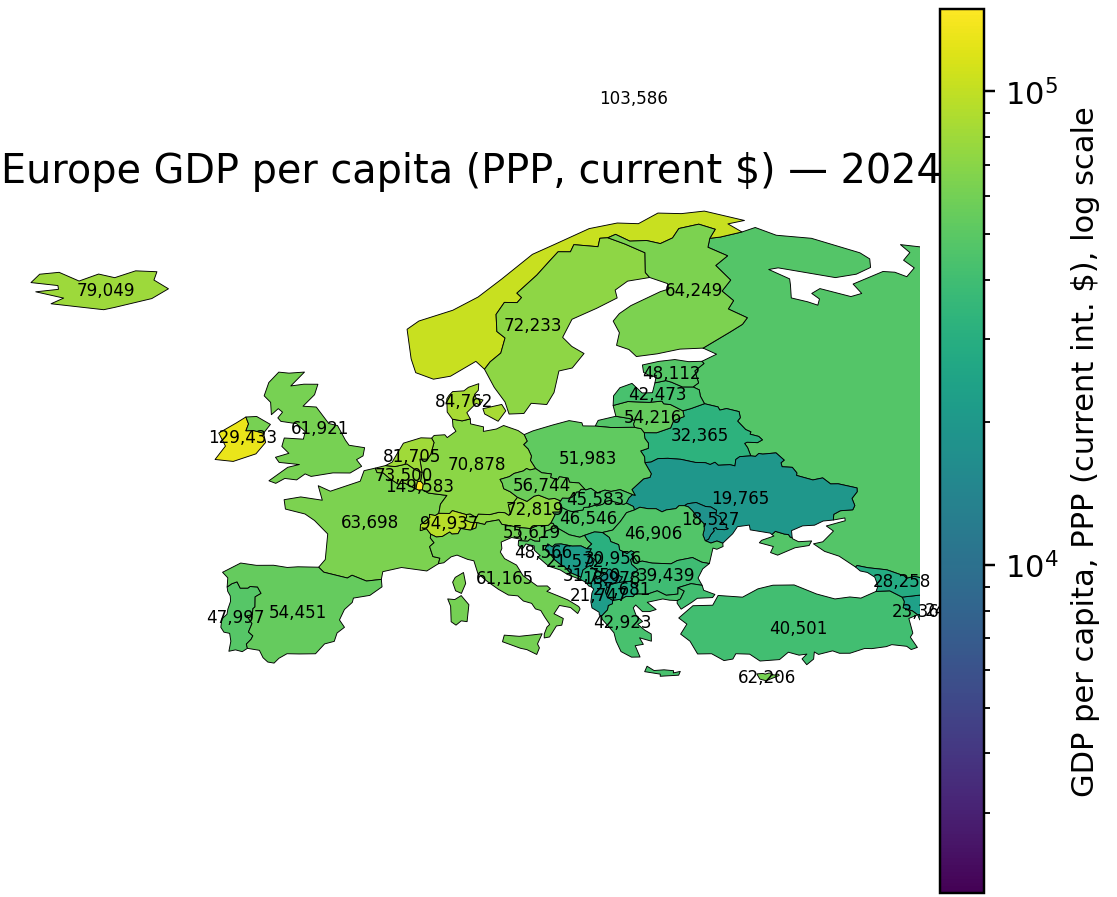
In earlier publications, we analyzed Lithuania’s economic success. We highlighted the vital role of lower private debt levels compared to other Central and Eastern European (CEE) countries. The maps presented here illustrate that the most critical factor common to all CEE countries is the expansion of the European economic area.
This expansion ensures that Central and Eastern Europe’s contribution to the global economy does not decline and remains around 5%. In contrast, the contributions of the United States and Western Europe decrease significantly (see Figure 3).
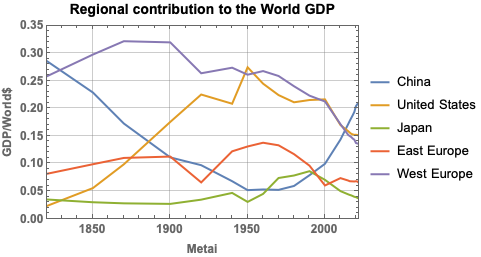
The combined contribution of Western and Eastern Europe to the global economy remains comparable to China’s and significantly exceeds that of the United States. A methodologically consistent assessment of global economic development thus stands in clear contrast to the frequently promoted media narratives about the US economy’s supposedly exceptional success.
See the Lithuanian text at Mokslo Lietuva.